How CNC Technology Transforms Plastic Fabrication for Various Industries
Understanding CNC Technology in Plastic Fabrication
What is CNC Machining?
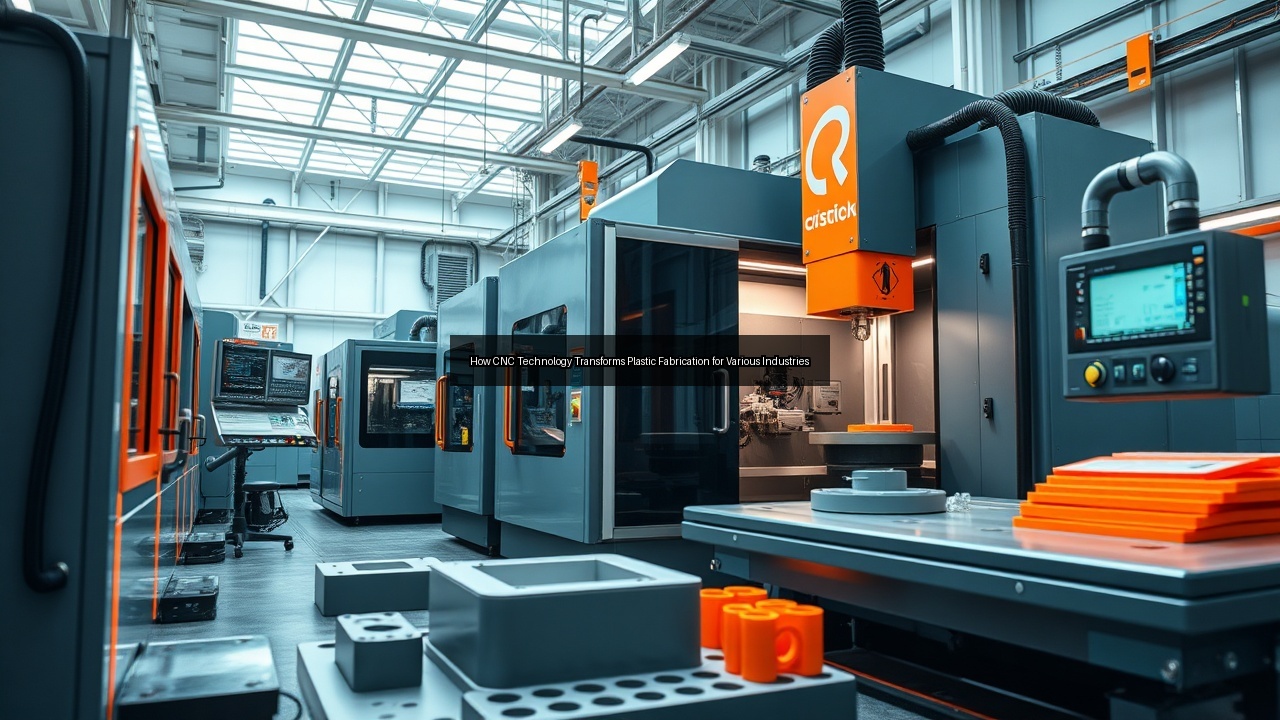
CNC machining delivers precise control over cutting tools through computer programming to shape raw materials into finished parts. Manufacturers rely on this automated process to produce machined plastic components with tight accuracy and repeatable results across multiple runs. Operators program the machine to follow exact paths that remove material layer by layer until the desired geometry appears. This method supports complex contours and fine details that manual methods struggle to achieve consistently. Machinists select appropriate feed rates and spindle speeds for each plastic type to avoid melting or chipping during the cut. The result is a reliable workflow that turns digital designs into physical machined plastic parts without extensive fixturing changes between batches.
The Role of CNC Machinery in Plastic Fabrication
CNC machinery drives plastic fabrication by converting engineering drawings into motion commands that guide mills, lathes, and routers. These machines handle everything from simple brackets to intricate housings made from various polymers. A single setup often completes multiple operations such as drilling, contouring, and threading on the same machined plastic component. Fabricators load stock material once and let the program run uninterrupted, which shortens lead times compared with conventional approaches. Companies integrate CNC machinery into larger production cells where robots transfer parts between stations to maintain continuous flow. This integration boosts throughput while preserving the dimensional integrity required for functional plastic machined components.
Advantages of CNC Machining for Plastic Components
Precision stands out as the primary benefit when fabricators use CNC machining for plastic components. Tolerances routinely reach ±0.05 mm or better, allowing parts to fit directly into assemblies without secondary handwork. Repeatability ensures every piece in a batch matches the previous one, a critical factor in industries that demand strict compliance. The process also minimizes material waste because the software optimizes tool paths to remove only what is necessary. Surface finishes achieved directly from the machine often eliminate the need for extra polishing, saving both time and cost. Additionally, CNC machining accommodates rapid design changes through simple program edits rather than new tooling, giving manufacturers flexibility when prototypes evolve into production machined plastic parts.
Applications of CNC Machined Plastic Components Across Industries
Aerospace Industry: Precision and Reliability
Aerospace manufacturers depend on CNC machined plastic components for interior panels, ducting, and sensor housings that must withstand vibration and temperature swings. Lightweight polymers reduce overall aircraft weight while CNC machining maintains the exact dimensions needed for aerodynamic performance. Engineers specify materials such as PEEK or Ultem because these grades offer high strength-to-weight ratios and flame resistance. Machinists program five-axis centers to create complex internal channels that improve airflow without adding fasteners. Every batch undergoes coordinate measuring machine verification to confirm tolerances before installation. This level of control supports certification requirements and ensures each plastic machined component performs reliably in flight-critical environments.
Automotive Sector: Lightweight and Durable Solutions
Automotive engineers turn to CNC machined plastic parts for brackets, intake manifolds, and under-hood clips that replace heavier metal alternatives. The process produces parts with smooth surfaces that reduce noise and improve fit during assembly. CNC machinery handles both low-volume prototypes and high-volume runs by simply adjusting program parameters. Durability improves when fabricators choose reinforced composites that resist fuel and oil exposure. Machinists maintain tight tolerances on mounting holes so components bolt directly into vehicle frames without adjustment. This approach shortens development cycles and allows quick iteration when design teams refine crash structures or thermal management systems.
Medical Applications: Custom Machined Plastic Parts
Medical device companies order custom machined plastic parts for surgical guides, instrument handles, and implantable trial components. CNC machining achieves the smooth finishes and exact geometries required for biocompatibility and sterilization compatibility. Manufacturers select medical-grade plastics such as polycarbonate or acetal that withstand repeated autoclave cycles. Programmers create tool paths that avoid sharp internal corners where bacteria could hide. Quality teams inspect each batch for surface defects and dimensional accuracy before release. This controlled process supports regulatory submissions and gives surgeons reliable tools that perform consistently in the operating room.
Consumer Goods: Mass Production of Quality Components
Consumer product manufacturers use CNC machining to produce machined plastic components for electronics casings, appliance knobs, and sporting goods. High spindle speeds combined with optimized cutters deliver glossy finishes that enhance perceived value. Production runs often reach thousands of identical pieces because the machines maintain consistent quality from first part to last. Fabricators switch between different plastic grades without changing hardware, simply by loading new programs. The flexibility allows rapid response to seasonal trends or customer feedback. Surface treatment options such as texturing or painting further customize appearance while preserving the structural integrity of each plastic machined component.
Engineering Plastics and Their Importance in CNC Machining
Types of Engineering Plastics Used in CNC Machining
Engineering plastics such as nylon, acetal, polycarbonate, and PEEK offer mechanical properties that suit demanding applications. CNC machining excels with these materials because they machine cleanly without excessive burr formation when feeds and speeds are set correctly. Nylon provides toughness and wear resistance for gears and bearings. Acetal delivers low friction and dimensional stability for precision slides. Polycarbonate combines impact strength with optical clarity for lenses and guards. PEEK withstands continuous temperatures above 200 °C, making it ideal for aerospace and medical machined plastic components. Each grade requires specific cutting parameters that machinists adjust to achieve the best surface quality and longest tool life.
Benefits of Using Composites in Machined Plastic Components
Composites reinforced with glass or carbon fiber increase stiffness and strength while keeping weight low. CNC machinery cuts these materials with diamond-coated tools that resist abrasion from the fillers. The resulting machined plastic components exhibit higher load-bearing capacity than unreinforced grades. Fabricators achieve tight tolerances on holes and mating surfaces because the reinforcements limit thermal expansion during cutting. Automotive and aerospace firms specify carbon-fiber-filled PEEK for brackets that must survive both mechanical stress and chemical exposure. Proper chip evacuation prevents heat buildup that could otherwise degrade the matrix around the fibers.
How Material Selection Affects Dimensions and Tolerances
Material choice directly influences achievable dimensions and tolerances during CNC machining. Plastics with high coefficients of thermal expansion require climate-controlled shops and coolant strategies that stabilize temperature throughout the cut. Machinists compensate for spring-back in tougher grades by adjusting tool paths slightly. Softer materials may need reduced depths of cut to prevent deflection on thin walls. Companies document material-specific parameters so every batch of machined plastic components meets the same specifications. Proper selection therefore reduces scrap rates and ensures parts assemble correctly without additional fitting operations.
The CNC Machining Process for Plastic Components
From Design to Production: The CNC Workflow
The workflow begins when engineers export CAD models into CAM software that generates tool paths. Machinists review the program for efficient sequencing that minimizes tool changes and air cuts. Stock material is fixtured on the machine table, and the operator verifies offsets before starting the cycle. Roughing passes remove bulk material quickly, followed by finishing passes that bring surfaces to final dimensions. Plastic cnc machined components emerge ready for inspection after the program completes. Automated tool changers and pallet systems allow continuous operation across multiple shifts, increasing overall capacity for batch production.
Surface Finishing Techniques for Machined Plastics
Surface finishing begins with the machining process itself through appropriate cutter geometry and feed rates. When finer finishes are required, technicians apply vapor polishing or bead blasting to remove tool marks from machined plastic parts. Some manufacturers add surface treatment coatings that improve wear resistance or reduce friction. These steps occur after dimensional checks so that any material removal remains within tolerance. Proper finishing enhances both aesthetics and functional performance of plastic machined components used in visible or sliding applications.
Quality Control: Ensuring Specifications are Met in Batch Production
Quality control teams measure critical dimensions on first-article samples using coordinate measuring machines and optical comparators. Statistical process control tracks variation across the entire batch production run. Operators document tool wear and make offset adjustments before deviations exceed limits. Final inspection includes visual checks for surface defects and verification that all machined plastic components match the approved drawing. This disciplined approach guarantees that every shipment meets customer specifications and reduces returns or rework.
Future Trends in CNC Technology for Plastic Fabrication
The Integration of Robotics in CNC Machining
Robotics integration allows unattended loading and unloading of plastic stock and finished parts. Collaborative robots work alongside machinists to handle repetitive tasks while the CNC machinery continues cutting. This setup increases machine utilization and reduces operator fatigue during long production runs. Automated inspection stations mounted on robot arms can check dimensions immediately after machining, feeding data back to the control system for real-time corrections. Manufacturers gain consistent output of machined plastic components even during overnight shifts.
Innovations in CNC Machinery for Enhanced Capabilities
New CNC machinery features higher spindle speeds, linear motors, and advanced thermal compensation that improve accuracy on engineering plastics. Hybrid machines combine additive and subtractive processes so operators can build features then machine them in the same setup. Software updates enable simulation of entire machining cycles to detect collisions before metal or plastic ever touches a tool. These innovations shorten setup times and expand the range of geometries possible for plastic cnc machined components.
Sustainable Practices in Plastic Fabrication Technology
Sustainable practices focus on recycling machining chips and selecting bio-based or recyclable plastics. CNC programs optimized for minimal waste reduce the volume of scrap generated per part. Closed-loop coolant systems filter and reuse fluids, lowering both cost and environmental impact. Manufacturers track energy consumption per machined plastic component to identify opportunities for efficiency gains. These efforts align production with corporate responsibility goals while maintaining the precision and repeatability that define modern plastic fabrication technology.